Cutest Chick in Kindergarten: A Designer’s Review
As an embroidery designer who has spent years digitizing patterns and reviewing assets for small business owners, I approach every new file with a mix of optimism and skepticism. We all know that what looks crisp on a computer screen does not always translate seamlessly to fabric. When I first loaded Cutest Chick in Kindergarten into my workspace, my immediate goal was to determine if this graphic held up under the mechanical realities of stitching. This is not just about aesthetics; it is about viability for craft businesses, Etsy sellers, and anyone creating handmade products for real customers.
First Impressions and Visual Personality
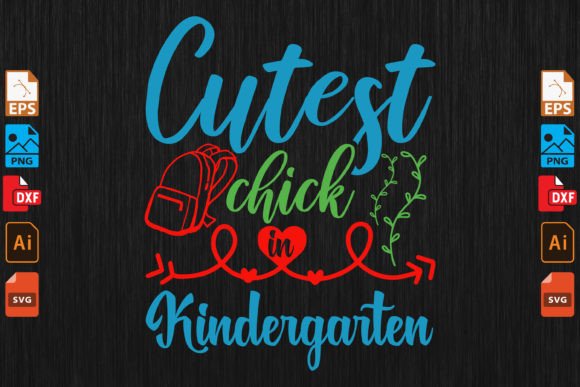
The initial mood of Cutest Chick in Kindergarten is undeniably cheerful and youthful. The theme taps directly into the back-to-school season and early childhood milestones, which are perennial bestsellers in the custom apparel market. Visually, the design relies on bold shapes and clear lines. For an embroidery project, this is a strong starting point. Complex gradients and tiny details often get lost in thread, but this design appears to prioritize clarity. The layout suggests a balance between playful character elements and readable typography, which is crucial when you are working with the limitations of needle and thread.
From a graphics perspective, the source material is described as suitable for t-shirt designs, book covers, and mugs. However, as an embroiderer, I look past the vector origins to see how it functions as a machine embroidery design. The visual personality is friendly and approachable, making it ideal for personalized gifts and boutique branding where warmth and charm are key selling points.
Real-World Application: The Tote Bag Test
To truly evaluate this asset, I imagined a specific real-life scenario: a custom order for a kindergarten teacher’s appreciation gift. The client wanted a sturdy canvas tote bag embroidered with a cheerful motif. Cutest Chick in Kindergarten seemed like a perfect fit. Canvas provides a stable base, allowing the stitch density to sit well without puckering. In this context, the design would serve as a focal point, likely centered on the front panel.
When considering sweatshirt embroidery or baby clothes, the stakes change slightly. On a fleece sweatshirt, the pile of the fabric can swallow fine details. I would recommend adjusting the pull compensation and ensuring that any running stitch outlines are tight enough to remain visible against the textured background. For baby embroidery, softness is paramount. If this design includes dense fill stitch areas, I would advise using a soft cut-away stabilizer to prevent irritation against sensitive skin. The charm of the design works well here, turning a simple onesie into a memorable keepsake.
Fabric and Hoop Considerations
One must be mindful of where this design is placed. Curved surfaces like caps present a challenge. If you attempt to stitch Cutest Chick in Kindergarten on a structured cap, you must ensure the hoop size accommodates the width without distorting the brim. Textured fabrics, such as terry cloth towels, require careful attention to stitch density. If the design is too open, the fabric shows through; if it is too dense, the towel becomes stiff. Testing on scrap fabric is non-negotiable here. I always run a test stitch-out on the actual material intended for the finished product to check for registration issues and thread breaks.
Dark fabrics pose another consideration. If the original graphic uses light colors, you must verify that your thread colors provide sufficient contrast. A yellow chick on a navy blue shirt pops beautifully, but subtle pastel shades might vanish. I recommend creating black and white mockups to assess the value contrast before committing to thread selection. This step ensures that the design remains legible and impactful regardless of the garment color.
Commercial Viability for Craft Businesses
For Etsy sellers and small shop owners, the commercial potential of Cutest Chick in Kindergarten lies in its versatility. It fits naturally into seasonal collections, particularly around August and September. However, its appeal extends to holiday embroidery for Easter or spring-themed events. The ability to use this as a digital embroidery file for multiple products increases its value. You can offer it as part of a bundle for custom apparel, or use it to create embroidered patches that can be ironed onto jackets and bags.
Brand consistency is vital for creative entrepreneurs. This design supports a brand image that is family-friendly, high-quality, and attentive to detail. When customers see a clean, well-stitched design, their trust in your handmade product increases. It signals professionalism. Whether you are selling printable mockups to other designers or finished goods to parents, the clarity of this graphic helps maintain a cohesive look across your inventory.
Technical Notes for Digitizers and Makers
While the product description mentions SVG and vector templates, those using this for machine work must consider the conversion process. If you are digitizing this from a graphic source, pay close attention to corner sharpness. Satin stitches can become bulky at tight angles, so breaking them into smaller segments or using tack-down stitches may be necessary. Check the stitch density carefully. Over-digitizing can lead to thread breaks and fabric distortion, while under-digitizing leaves gaps.
Always confirm licensing before selling finished items or digital products. The description notes it is for craft design and personal use contexts, but commercial rights vary. Ensure you have the appropriate license for commercial embroidery projects if you plan to sell the stitched items. Additionally, verify the file formats provided. While SVG is great for cutting machines, embroidery machines require specific formats like PES, DST, or JEF. If these are not explicitly listed, contact the creator, mrrana62783, to clarify compatibility with your specific machine.
Final Verdict on Design Utility
Cutest Chick in Kindergarten is a solid choice for makers looking to add a touch of whimsy to their offerings. It performs best on stable fabrics like cotton, canvas, and denim, where the stitch definition can shine. It requires thoughtful adaptation for stretchy or textured materials, but with proper stabilizer and testing, it yields professional results. For hobbyists and professional decorators alike, this design offers a reliable foundation for creating engaging, marketable products. By focusing on stitch clarity and fabric compatibility, you can transform this graphic into a high-value asset for your craft business.