Reviewing the Parrot Quote Retro T-Shirt Design
As a designer who spends half my life digitizing and the other half stitching, I have learned that not every Graphics file translates well to thread. We often see vibrant digital mockups that look stunning on screen but turn into a tangled mess under the needle. Recently, I pulled up the Parrot Quote Retro T-Shirt Design to evaluate its potential for real-world application. This is not just about aesthetics; it is about practicality, stitchability, and commercial viability for those of us running a craft business.
First Impressions and Visual Personality
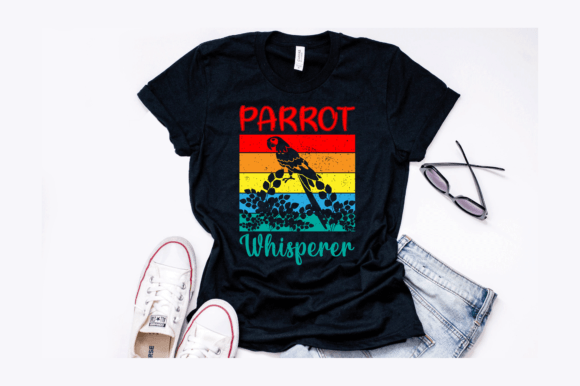
The first thing that strikes you about this design is its mood. It carries a distinct retro vibe, likely utilizing bold lines and a playful composition that hints at nostalgia without feeling dated. For an embroidery project, this visual personality is crucial. It suggests fun, warmth, and approachability. When I imagine this stitched out, I do not see it on stiff corporate uniforms. Instead, I see it on soft, lived-in fabrics.
The layout appears balanced, which is essential for maintaining structural integrity during stitching. If the elements are too spread out, you risk long jumps that can snag. If they are too dense, the fabric puckers. From a reviewer’s perspective, the Parrot Quote Retro T-Shirt Design seems to strike a middle ground that favors clarity. The theme supports a friendly message, making it ideal for personalized gifts or boutique branding where tone matters as much as technique.
Real-World Application Scenarios
Let us move beyond theory and talk about where this design actually works. I recently considered using a similar aesthetic for a custom order involving a canvas tote bag. The Parrot Quote Retro T-Shirt Design would excel here. Canvas provides a stable base for what might be moderate stitch density. The bold nature of retro graphics usually relies on solid shapes, which translate beautifully into fill stitch areas that cover the fabric evenly without leaving gaps.
Beyond totes, consider sweatshirt embroidery. A fleece or cotton-blend hoodie offers enough thickness to support the design without requiring heavy backing. The retro color palette often associated with such designs—think mustard yellows, teal blues, or burnt oranges—pops wonderfully against neutral heather greys or navy blues. This makes it a strong contender for Etsy seller inventories looking to expand their T-Shirt Designs catalog with something that feels handmade yet professional.
For baby embroidery, caution is advised. While the motif is cute, you must ensure the thread colors are colorfast and the backing is soft enough for sensitive skin. However, for older children’s apparel or nursery decor like pillow covers, this design adds a whimsical touch that parents appreciate.
Technical Considerations for Stitching
When evaluating any machine embroidery design, we must look at the mechanics. Retro styles often utilize clean lines, which may imply a mix of satin stitch for borders and text, and fill stitches for larger graphical elements. Satin stitches are gorgeous but tricky on stretchy fabrics. If you plan to put this on a thin jersey t-shirt, you must use a high-quality cut-away stabilizer to prevent distortion.
One area to watch closely is the lettering. "Quote" designs live or die by their text legibility. In embroidery, tiny serifs or thin connections between letters can break or merge. Before committing to a full production run, I always recommend stitching a test sample on scrap fabric. Check if the small details in the parrot’s feathers or the quote’s punctuation hold up. If the embroidery file has excessive density in these small areas, it may need editing to reduce bulk.
Curved surfaces present another challenge. If you are applying this to a cap, the hoop size and shape matter immensely. A standard flat hoop might distort the design on a structured cap. Ensure your hoop size accommodates the full width of the graphic without encroaching on the seam lines. For caps, a lighter weight thread might help reduce stiffness, keeping the hat wearable rather than rigid.
Fabric and Color Strategy
The success of this design depends heavily on thread colors and fabric texture. Retro designs often rely on contrast. On dark fabrics, you will need bright, vibrant threads to make the design pop. On light fabrics, you might need to add a subtle outline or shadow effect to ensure the design does not wash out. I always test my designs in black and white mockups first to check value contrast. If the design disappears in grayscale, it will likely lack impact when stitched.
Textured fabrics like waffle knit or linen require adjustments. The needle may skip on loose weaves, so a topping stabilizer might be necessary to keep the stitches smooth. For smooth cottons or poly-blends, the design should stitch cleanly with minimal intervention. Remember, the goal is a polished finished product that looks intentional, not accidental.
Commercial Viability and Branding
For commercial embroidery professionals, this design offers versatility. It fits well within the current trend of nostalgic, cheerful home goods and apparel. It can serve as a standalone embroidered patch if digitized with a border, allowing customers to iron it onto jackets or bags later. This adds value to your design assets library.
However, always verify licensing. The product description mentions it is best for t-shirts and mugs, but does not explicitly state commercial rights for digital resale. If you are an Etsy seller creating physical items, you are generally safe, but if you plan to resell the digital embroidery file itself, you must confirm the terms. Never assume. Protect your small shop product line by ensuring your assets are cleared for intended use.
Final Verdict and Practical Tips
The Parrot Quote Retro T-Shirt Design is a promising addition to any designer’s toolkit. It balances charm with technical feasibility. To get the best results:
- Test on scrap fabric before cutting into your final garment.
- Check thread contrast against your chosen fabric background.
- Use appropriate stabilizers based on fabric stretch and weight.
- Inspect small details for stitch connectivity and density.
- Confirm licensing if selling finished items or digital files.
In conclusion, this design is more than just a pretty picture. It is a functional applique design candidate that, when handled with care, can elevate a simple tote bag design or holiday embroidery project into a standout piece. For makers who value both aesthetics and craftsmanship, it is worth the stitch time.